
Pull up a chair. If you’re reading this, you’ve probably been thinking about getting stronger for a while. Maybe your knees complain on the stairs. Maybe you got winded carrying groceries, or your doctor said the words “bone density” and they stuck with you. Maybe you just looked in the mirror and thought, I want to feel like myself again.
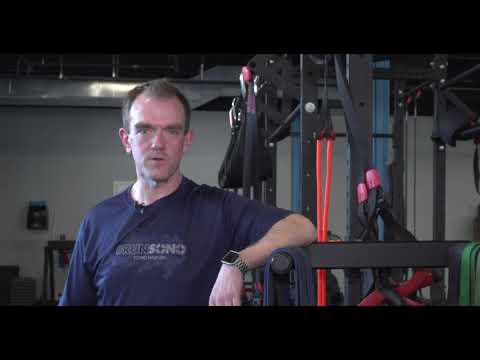
I’ve been coaching adults in Newington for nearly 20 years. The most common thing I hear from people over 40 is, “I know I should be lifting, but I don’t know where to start, and I’m worried I’ll get hurt.”
So let’s fix that. This is everything I’d tell you if you were a friend sitting across from me: why strength training matters so much now, how to start safely, what to actually do, and answers to the questions people are usually too embarrassed to ask.
Why strength training matters more after 40
In your 20s, your body forgives a lot. After 40, it starts keeping score. Here’s what’s going on, and why lifting is the best tool we have to push back.

You’re slowly losing muscle, unless you give it a reason to stay. Starting somewhere in our 30s, most of us lose a little muscle every year. It’s gradual, so you don’t notice until one day getting off the floor is harder than it used to be. The good news is that muscle responds to training at any age. People in their 60s, 70s and beyond build real strength when they train consistently.
Your bones need load. Bones get stronger when they’re asked to handle weight. Walking is great, but strength training gives your bones a stronger signal to stay dense. That matters more and more as we age, especially for women after menopause.
Your metabolism and blood sugar benefit. Muscle is one of the main places your body stores and uses sugar from your food. More muscle generally means better blood sugar control and a body that handles meals better.
Your joints often feel better, not worse. This surprises people. Strong muscles around your knees, hips and back take pressure off those joints. Many of my clients come in with achy knees and find that, done right, strength training is what finally helps.
Balance and confidence. Stronger legs and a stronger core mean better balance, and better balance means fewer falls. It also means confidence: carrying the suitcase, playing with the grandkids, hiking the trail, doing the yard work without paying for it the next day.
Your mood and sleep. People almost always tell me they sleep better and feel less stressed within a few weeks. That’s not a side effect. For a lot of folks, it’s the main reason they stay with it.
The myths that keep people from starting
Let’s clear these out of the way, because they stop more people than injuries ever do.
“I’m too old to start.”
You’re not. Muscle and strength respond to training at every age. You may progress a little slower than a 25-year-old, but you’ll progress.
“I need to get in shape before I start lifting.”
This is like cleaning the house before the cleaners come. Strength training is how you get in shape. A good program starts exactly where you are today.
“Lifting weights will make me bulky.”
Building big muscles takes years of very specific training and eating. What you’ll actually see is firmer, stronger and more capable. Most people say their clothes fit better.
“Weights are bad for my joints.”
Poor form and doing too much too soon are bad for your joints. Controlled, well-coached strength training is one of the best things you can do for them.
“Cardio is better for losing weight.”
Cardio is good for your heart and burns calories while you do it. Strength training builds the muscle that helps you look and feel better long term. The best results come from doing both, with strength as the foundation.
“I’ll hurt my back.”
Lifting with poor form or ego can hurt your back. Learning to hinge properly, with good coaching, is one of the best things you can do to protect your back for everyday life.
Before you start: three quick steps
1. Check in with your doctor if you need to.
If you have heart issues, high blood pressure that isn’t under control, recent surgery, a joint replacement, diabetes, or you’re just unsure, talk to your doctor before you start. Most people get a green light, often with a “that’s a great idea.” Tell your trainer about anything your doctor says.
2. Be honest about where you’re starting.
Can you get up from a chair without using your hands? Carry a bag of groceries in each hand up a flight of stairs? Get down on the floor and back up? There’s no wrong answer. This just tells you where to begin.
3. Pick a reason that matters to you.
“Get in shape” is vague. “Keep up with my grandkids,” “hike a section of the Appalachian Trail in June,” “stop my back from hurting when I garden” or “be able to lift my own carry-on” are reasons that get you out of bed on a cold January morning.
The basic movements: everything builds on these
Forget the long list of machines. Nearly every good strength program is built on a handful of movement patterns you use in daily life.
1. Squat (sitting down and standing up)
Real life: getting out of a chair or the car, climbing stairs.
Where to start: sit-to-stand from a bench or chair, then a goblet squat holding one dumbbell at your chest.
2. Hinge (bending at the hips, not the back)
Real life: picking something up off the floor, lifting a laundry basket.
Where to start: hip bridges on the floor, then a dumbbell Romanian deadlift. This one is worth learning with a coach; it’s the movement that protects your back.
3. Push (moving something away from you)
Real life: pushing a door, getting up off the floor, putting a bag in the overhead bin.
Where to start: wall or counter push-ups, then incline push-ups, then a dumbbell press.
4. Pull (bringing something toward you)
Real life: opening a heavy door, starting the lawnmower, good posture.
Where to start: band rows or a cable row, then single-arm dumbbell rows.
5. Carry (holding weight while you walk)
Real life: groceries, luggage, a toddler.
Where to start: farmer’s carries, walking with a dumbbell in each hand while standing tall.
6. Core (keeping your trunk steady)
Real life: everything above, plus balance.
Where to start: dead bugs, bird dogs and planks (from your knees at first is fine).
If you get strong at these six, everything else in life gets easier.
How much, how heavy, how often
This is where most people overthink it. Here’s the simple version.
- How often: 2 to 3 days a week, with at least one day off between sessions. Two good days a week beats four days you can’t sustain.
- How long: 30 to 45 minutes is plenty, including a warm-up.
- Sets and reps: For most exercises, 2 to 3 sets of 8 to 12 reps.
- How heavy: Pick a weight where the last 2 or 3 reps feel challenging but your form stays clean. If you finish a set thinking “I could have done ten more,” it’s too light. If your form falls apart, it’s too heavy. You want “hard, but I’ve still got a couple left.”
- Rest: About 60 to 90 seconds between sets. Take more if you need it. This isn’t a race.
A simple beginner plan you can start this week
Do this two or three days a week, alternating Workout A and Workout B. For example: Monday A, Wednesday B, Friday A, then the next Monday B.
Warm-up (5 to 8 minutes, every session)
- 3 to 5 minutes of easy movement: walking, a bike or marching in place
- 10 bodyweight squats to a chair
- 10 hip bridges
- 10 arm circles each direction
- 10 band pull-aparts or wall slides
Workout A
- Goblet squat (or sit-to-stand): 3 x 8 to 12
- Incline push-up (hands on a bench or counter): 3 x 8 to 12
- Hip bridge: 3 x 10 to 15
- Band or cable row: 3 x 10 to 12
- Farmer’s carry: 3 walks of 30 to 40 seconds
- Dead bug: 2 x 8 each side
Workout B
- Dumbbell Romanian deadlift (light, form first): 3 x 8 to 10
- Step-up to a low step: 2 to 3 x 8 each leg
- Dumbbell shoulder press (seated is fine): 3 x 8 to 12
- Single-arm dumbbell row: 3 x 10 each side
- Side plank from the knees: 2 x 15 to 20 seconds each side
- Bird dog: 2 x 8 each side
Cool-down: a few minutes of easy walking and gentle stretching for your hips, chest and hamstrings.
How to make progress (without getting hurt)
Your body adapts to what you ask of it, so you have to ask a little more over time. The safest way I know is called double progression:
- Pick a rep range, for example 8 to 12.
- Start with a weight you can lift for 8 good reps.
- Each week, try to add a rep or two at the same weight.
- When you can do 12 good reps on every set, move up to the next weight and start back at 8.
Small jumps, steady progress. Some weeks you’ll feel great, some weeks you won’t. That’s normal. Look at the trend over a month, not a single day.
Working around aches and old injuries
Almost everyone over 40 brings a little history with them. A cranky knee, a stiff back, a shoulder that doesn’t like going overhead. That’s fine. You train around it, and often you train it back to health.
Know the difference between soreness and pain.
- Muscle soreness is a dull, achy feeling in the muscle a day or two after training. It’s normal, especially early on, and it fades.
- Pain is sharp, pinching, or in the joint itself, or it gets worse as you keep going. That’s your signal to stop that exercise and adjust.
A good rule: mild discomfort that stays at a 3 out of 10 or below, and settles by the next day, is usually okay. Anything sharper, or that lingers, gets changed.
Knees: Squat to a box or bench so you control the depth. Keep your knees in line with your toes. Step-ups to a low step and hip bridges are usually knee-friendly.
Lower back: Learn the hip hinge before adding weight. Start with bridges and bird dogs. Keep weights close to your body.
Shoulders: Start with pressing at an incline instead of straight overhead. Rows and band work to strengthen the upper back often help shoulders feel better.
Joint replacements or arthritis: Many people with both train successfully. Get your surgeon’s or doctor’s guidance on any limits, and work with a trainer who will respect them.
Recovery: where the results actually happen
The workout is the signal. Recovery is where your body gets stronger.
- Sleep. Aim for 7 to 9 hours. Poor sleep makes everything harder: strength, mood, appetite and motivation.
- Protein. Muscle is built from protein, and many of us over 40 don’t eat enough of it. A simple target: include a palm-sized portion of protein at every meal, such as eggs, Greek yogurt, chicken, fish, lean meat, beans or tofu.
- Water. Drink regularly through the day, more on training days.
- Move on your off days. A walk, light stretching or an easy bike ride helps you recover faster than sitting still.
- Rest days are part of the plan. They’re not skipping. That’s when the progress happens.
Where cardio fits in
You still want a healthy heart. The easiest approach:
- Do your strength workouts 2 to 3 days a week.
- Walk most days. Aim to build up to 20 to 30 minutes.
- If you want more, add one or two sessions of something that gets your breathing up, like a brisk walk on hills, the bike or a group class.
If you do both on the same day, lift first while you’re fresh, then do your cardio. (More on that in cardio before or after strength training.)
What to expect (and when)
Everyone’s different, but here’s a realistic picture.
Weeks 1 to 2: You’ll feel a bit awkward and probably sore. You’re learning the movements. This is the hardest part, and it passes.
Weeks 3 to 6: The movements feel natural. You’re adding weight or reps. Most people notice they’re sleeping better and have more energy. Stairs and carrying things start to feel easier.
Weeks 6 to 12: Clothes fit differently, posture improves, and everyday life feels lighter. This is when people tell me, “I can’t believe I waited this long.”
The single biggest factor isn’t the program. It’s showing up. Two sessions a week for a year will change your life far more than six sessions a week for a month.
Doing it on your own vs. working with a coach
You can absolutely start on your own with the plan above. But here’s why many people over 40 choose to work with a coach, at least at first:
- Form and safety. A coach catches the small things, like a rounding back or a knee caving in, before they become problems.
- The right starting point. No guessing whether you’re doing too much or too little.
- Working around injuries. A good coach adjusts exercises to your body, not the other way around.
- Accountability. Having someone expecting you at 6 AM is the best motivation there is.
At CT Workout, that’s what we do every day: personal training and small group classes built for adults over 40.
Frequently asked questions
Am I too old to start strength training?
No. People start in their 40s, 50s, 60s and beyond, and they get stronger. The key is starting at the right level and progressing gradually.
Do I need to lose weight before I start?
No. Strength training helps with weight loss and body composition. Start now, at whatever weight you are.
How soon will I see results?
Most people feel a difference (energy, sleep, everyday tasks) within 3 to 4 weeks. Visible changes usually take 8 to 12 weeks of consistent training and sensible eating.
How sore will I be?
Some soreness in the first couple of weeks is normal, usually 24 to 48 hours after a workout. Starting light and building up keeps it manageable. It gets much better once your body adapts.
Should I use free weights or machines?
Both work. Machines are easy to learn and good for beginners. Free weights like dumbbells train balance and coordination too. Most good programs use a mix.
Can I strength train if I have arthritis?
In most cases, yes, and many people with arthritis find it helps. Check with your doctor, start light, use pain-free ranges of motion, and work with someone who can adjust exercises for you.
What if I’ve had a knee or hip replacement?
Many people train successfully after a joint replacement. Follow your surgeon’s guidance on limits and timing, and make sure your trainer knows about it.
Will strength training help me lose weight?
It helps, especially combined with good eating habits. It builds muscle, supports your metabolism and changes how your body looks and feels, even when the scale moves slowly.
What should I eat?
Keep it simple: protein at every meal, plenty of vegetables and fruit, whole foods most of the time, and enough water. You don’t need a perfect diet. You need a consistent one.
Do I need supplements?
Not to get started. Focus on food, sleep and consistency first. If you’re curious about anything specific, ask your doctor.
Is it okay to train every day?
Not for strength training as a beginner. Your muscles need time to recover. Two to three days a week with walking on the other days is ideal.
What if I miss a week?
Nothing is ruined. Just pick up where you left off, maybe a little lighter for the first session back. Consistency over months matters far more than any single week.
What should I wear and bring?
Comfortable clothes you can move in, supportive sneakers, a water bottle and a small towel. That’s it.
Is group training or personal training better for me?
Personal training is best if you’re brand new, have injuries, or want a fully individualized plan. Small group training is a great fit once you know the basics and enjoy training with others. Many people start personal and then move into group classes.
I’m nervous about walking into a gym. Is that normal?
Completely normal, and you’re not alone. That’s exactly why CT Workout focuses on adults over 40. No judgment, no showing off, just people like you getting stronger.
Your next step
If you’ve read this far, you’re ready. You don’t need to be fitter, younger or more motivated before you start. You just need a first step.
Here’s mine for you: come in for a free 30-minute consultation. We’ll talk about your goals, any aches or past injuries, and what you want to be able to do. Then we’ll show you exactly where to start. No pressure, no sales pitch, just a plan.
Book Your FREE 30-Minute Consultation
Prefer to talk first? Call or text us at (860) 452-3511.
CT Workout
37 Ann St, Newington, CT 06111
Parking in the main lot on Ann St, with more on the Kitts Lane side.
Hours: Monday to Friday 5 AM to 7 PM, Saturday 8 to 11 AM, closed Sunday.
Helping adults in Newington, Wethersfield, Rocky Hill, Berlin, West Hartford and New Britain get stronger since 2008.
Learn more: Personal Training · Group Fitness Classes
This article is for general information and isn’t medical advice. If you have a health condition, an injury or any concerns, talk with your doctor before starting a new exercise program.
Questions about this article?
Our coaches in Newington are happy to help. Call or text (860) 452-3511.
Book a Free Consultation →


 Heather
 Niki
 Max
 Jim


